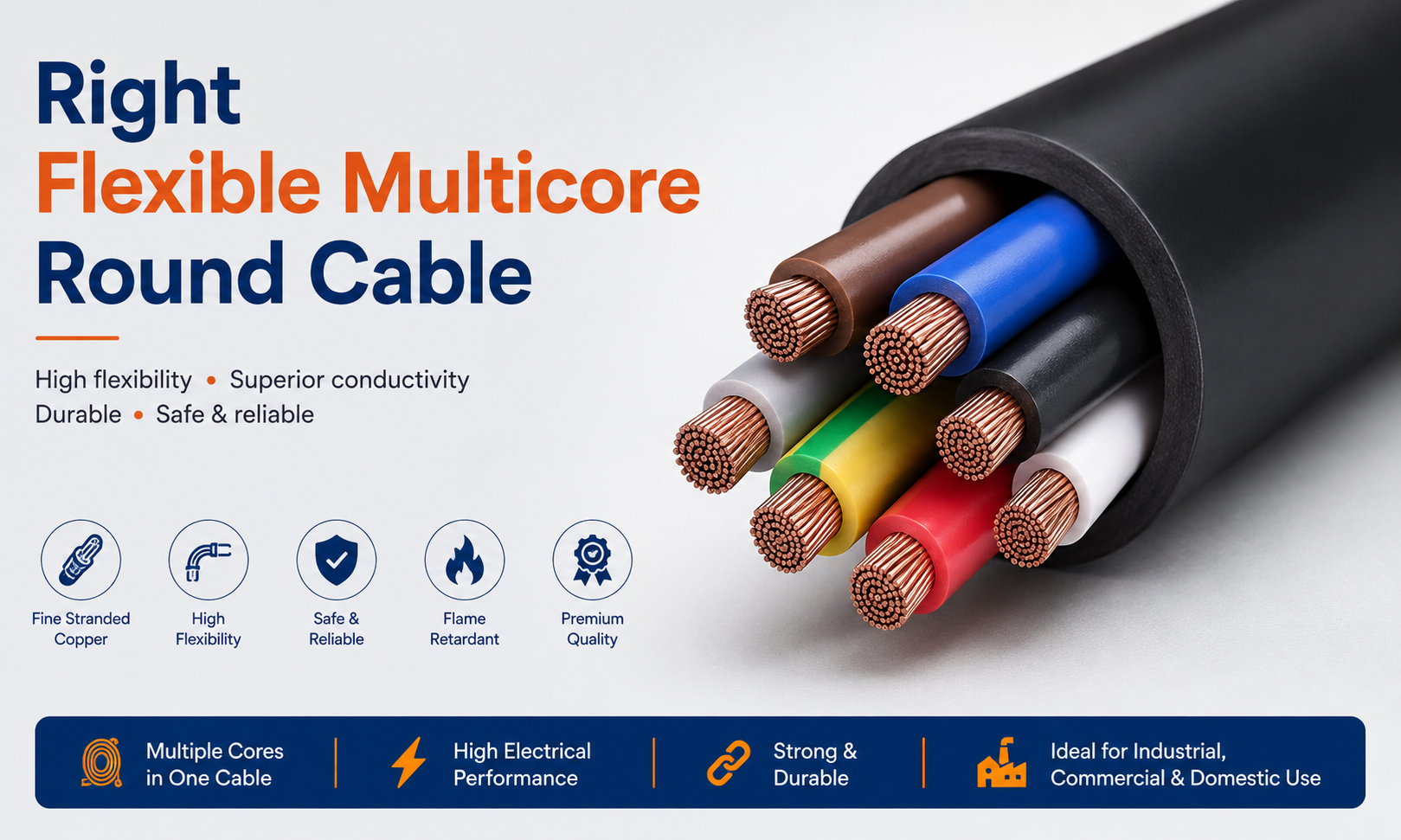
Choosing the right electrical cable for an industrial application is not simply a matter of selecting a product based on its size or price. In factories, workshops and commercial facilities, cables may be connected to machines, control panels, equipment and systems that operate for long hours under different working conditions.
This makes proper cable selection important.
A Flexible Multicore Cable can be a practical choice where multiple electrical connections need to be carried through a single cable and easier handling is required. However, not every cable is suitable for every industrial application. The right choice depends on factors such as the equipment being connected, the installation environment, movement requirements and verified electrical specifications.
This guide explains what buyers, contractors, OEMs and industrial professionals should consider when selecting a Flexible Multicore Round Cable for industrial wiring.
Start by Understanding the Application
The first question should always be: Where and how will the cable be used?
Industrial environments can vary significantly. A cable installed inside a control panel may have different requirements from one connected to manufacturing equipment or machinery exposed to regular vibration.
Before selecting an Industrial Multicore Cable, it is helpful to understand:
- The type of machine or equipment being connected
- Whether the cable will remain stationary or experience movement
- The number of electrical connections required
- The installation location and surrounding conditions
- The expected electrical load and system requirements
- Whether vibration or mechanical stress is involved
When these requirements are clear, selecting a suitable cable becomes much easier. Instead of choosing a product based only on appearance or cost, buyers can compare the application's needs with the cable manufacturer's verified specifications.
Consider Why Flexibility Matters
Flexibility is one of the main reasons multicore cables are widely considered for machinery and industrial wiring applications.
During installation, cables may need to pass through equipment layouts, panels or confined spaces where easy routing is important. A flexible construction can make handling and installation more convenient in suitable applications.
However, flexibility should always be considered according to the actual working conditions. Occasional bending during installation is very different from continuous repetitive movement during machine operation.
For this reason, buyers should clearly understand whether the cable will be used for:
- Fixed installations
- Equipment with occasional movement
- Applications involving vibration
- Machinery requiring regular cable movement
A Flexible Cable for Industrial Wiring should be selected according to the demands of the specific application rather than assuming that one cable construction will work everywhere.
Check the Number of Cores Required
Another important consideration is the number of cores needed for the electrical system.
A multicore cable contains multiple insulated conductors within one overall construction. This can help create a more organised wiring arrangement where several electrical connections are required.
The required number of cores depends on the equipment and system design. Machines, control systems and industrial installations may have different power or control requirements, so the cable configuration should be selected accordingly.
Before purchasing, it is important to review the equipment's wiring requirements carefully. Choosing the correct number of cores from the beginning can make installation planning more straightforward and help avoid unnecessary changes later.
Evaluate the Conductor and Cable Construction
The conductor is responsible for carrying electrical current, making its material and construction important factors in cable selection.
Copper conductors are commonly used in many electrical cable applications because of their conductivity. The conductor construction can also affect how easily a cable can be handled and routed.
For applications where flexibility is important, stranded conductor construction may provide advantages in handling compared with more rigid constructions. However, the final selection should always depend on the actual electrical and mechanical requirements of the installation.
Buyers should therefore look beyond the outer appearance of the cable and check the product information provided by the manufacturer.
Consider Insulation and the Working Environment
The installation environment plays a major role in choosing the right cable.
A Submersible Copper Cable may be suitable for a range of applications depending on its construction and verified specifications. However, buyers should not assume that every PVC-insulated cable is designed for the same conditions.
Before making a selection, consider the environment in which the cable will operate.
Temperature
The expected operating conditions should be checked against the manufacturer's product specifications.
Moisture and Humidity
If the installation area is exposed to moisture or humidity, the cable construction should be suitable for those conditions.
Mechanical Exposure
Industrial cables may be installed around machinery, equipment or areas where physical contact and mechanical stress are possible.
Indoor or Outdoor Installation
The installation location can influence the type of cable construction and protection required.
Looking at the complete working environment helps buyers make a more practical decision instead of selecting a cable based only on its basic description.
Don't Select a Cable Based Only on Price
Price is naturally an important consideration, especially for contractors, distributors and businesses purchasing cables in bulk. However, the lowest-priced option is not always the most suitable option for the application.
A better approach is to evaluate the overall value offered by the product.
Buyers should consider:
- Suitability for the intended application
- Cable construction
- Quality of materials
- Verified technical specifications
- Manufacturing consistency
- Availability for bulk requirements
- Supplier reliability
For industrial projects and OEM requirements, consistent supply can also be important. A business may need the same product specification for future installations or production requirements.
Always Check Verified Product Specifications
One of the most important steps in electrical cable selection is reviewing the manufacturer's actual product specifications.
Depending on the application, buyers may need to confirm details such as:
- Conductor material
- Number of cores
- Cable size
- Insulation material
- Outer sheath construction
- Voltage rating
- Temperature suitability
- Flexibility characteristics
- Recommended application
These details should be confirmed directly from the manufacturer or verified product documentation.
A proper Electrical Cable Selection Guide should always encourage buyers to match the product specifications with their actual installation requirements. If the application is complex or involves specialised electrical requirements, professional technical guidance may also be necessary.
Choosing a Reliable Flexible Multicore Round Cable Manufacturer
The product itself is important, but choosing a reliable Flexible Multicore Round Cable Manufacturer also matters.
Contractors, OEMs, distributors and industrial buyers often require more than just a cable. They may need consistent product availability, clear information and support for bulk requirements.
Before choosing a manufacturer, it is useful to consider:
- Manufacturing capabilities
- Product range
- Quality control processes
- Availability for regular or bulk supply
- Clarity of technical product information
- Delivery capability
- Customer support
Working with a manufacturer that understands different electrical applications can help buyers make more informed purchasing decisions.
Making the Right Choice for Industrial Wiring
The right Flexible Multicore Cable depends on the application. There is no single cable that can automatically be considered the best choice for every machine, panel or industrial installation.
A practical selection process begins with understanding the equipment and working environment. Buyers should then evaluate factors such as the number of cores, flexibility requirements, cable construction and verified electrical specifications.
Businesses looking for electrical cable solutions for residential, commercial and industrial requirements can explore products from manufacturers such as LNK Global Private Limited, which offers cable solutions designed for different wiring applications.
The most important approach is simple: understand the application first and select the cable based on verified requirements.
Final Thoughts
Choosing the right PVC Cable Multi Strand Wire requires more than comparing prices or selecting the first available option. The equipment, installation conditions, movement requirements, number of cores and product specifications should all be considered before making a decision.
For contractors, OEMs and industrial buyers, taking time to understand these factors can lead to a more suitable and informed cable selection.
When purchasing for an industrial project, always review the manufacturer's product information and ensure that the selected cable matches the actual requirements of the installation. A well-informed decision helps create a more organised, practical and reliable electrical wiring setup.
